Most professionals who need support don't ask for it. In law, the reasons are well known.
Fear of professional consequences
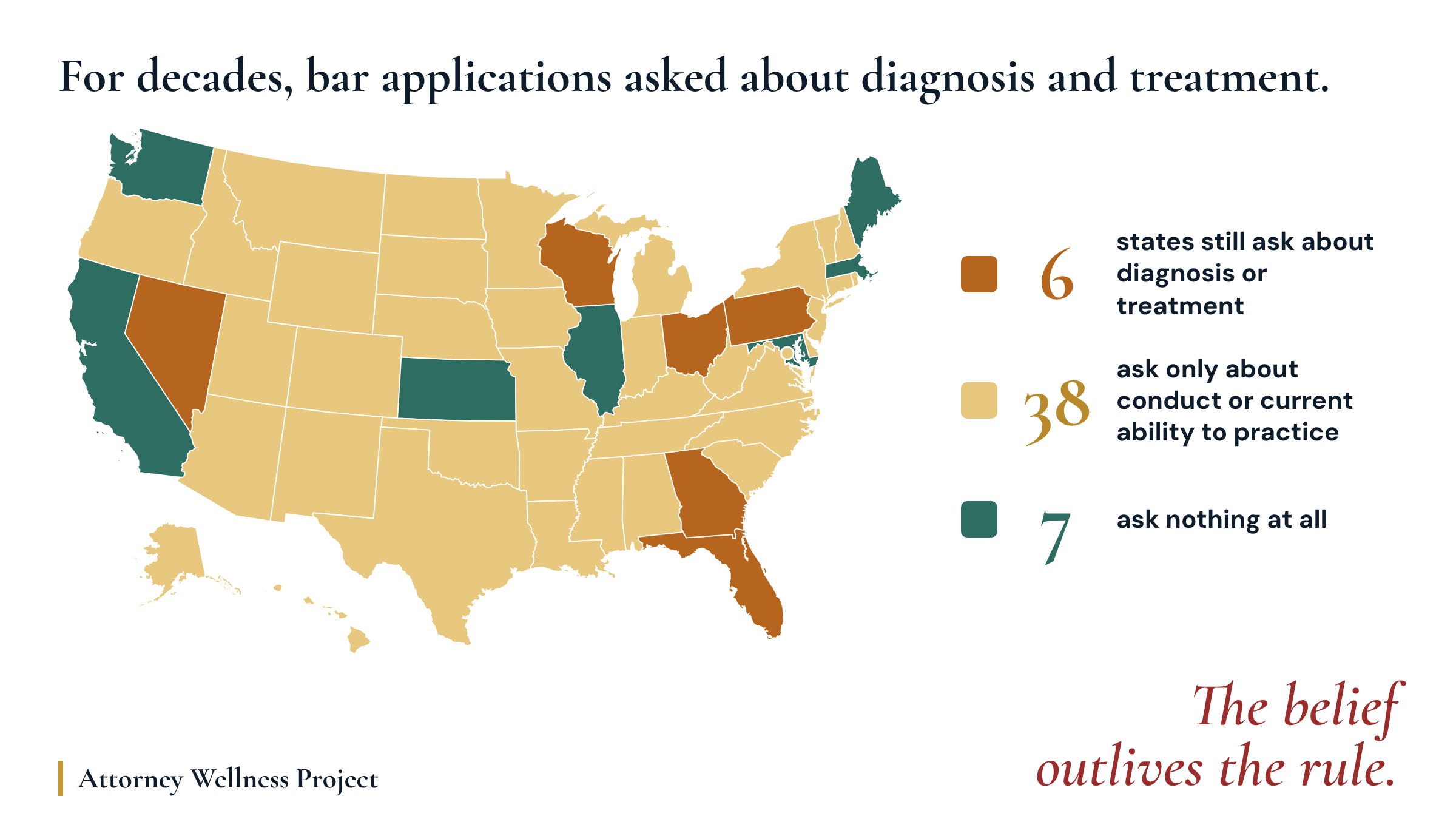
This is the barrier lawyers name most: worry about what disclosure will do to a career. For decades, bar applications asked about mental health diagnosis and treatment, and a generation of lawyers learned that the licensing authority wanted to know. Most states have since narrowed or dropped those questions. The belief stayed.
Fear of consequences inside the firm
In an up-or-out partnership (and with AI eyeing your job), it's rational to worry that a disclosure will quietly change who gets the work and the opportunities.
The culture of endurance
Law selects for and rewards tolerance for pressure, a willingness to absorb workload and a reluctance to concede. Lawyers spend their working lives not showing weakness to an opponent, and that habit doesn't switch off in front of a supervising partner. The traits are useful. They also make asking for help feel like a mistake.
Not knowing what asking would look like
Many lawyers don't ask because they can't picture what help involves, what it costs, how long it takes or who would know. Every state has a lawyer assistance program, most are free and confidential, and very few lawyers know how theirs works. Find yours in our directory of all 51 programs.
An invisible safety net doesn't exist.
Dr. Sunny Nakae
What actually reduces the gap
- Accurate information. Most of the fear is about consequences that no longer exist.
- Senior people going first. One partner speaking openly does more than any policy.
- Lower stakes. Clear workload allocation and review processes that can't quietly punish a disclosure.
- Early support as routine. Coaching and consultation treated as ordinary professional development.
Give us a call. Even if we aren't the right fit, we can usually find a way to help or point you in the direction of the appropriate company or resources.
If you are in crisis, call or text 988.
The 988 Suicide & Crisis Lifeline provides free and confidential emotional support to people in suicidal crisis or emotional distress 24 hours a day, 7 days a week, across the United States and its territories. The 988 Lifeline is made up of a national network of over 200 local crisis centers, combining local care and resources with national standards and best practices.